
Your TV survived last Tuesday’s thunderstorm. Your HVAC probably did too. But that doesn’t mean the next power surge won’t silently fry the circuit boards inside both of them.
A whole-house surge protector stops that from happening, and in 2026, every home with modern electronics and appliances should have one installed at the electrical panel.
We’ll break down the top 7 options, explain what the specs actually mean, and help you figure out which one fits your home.
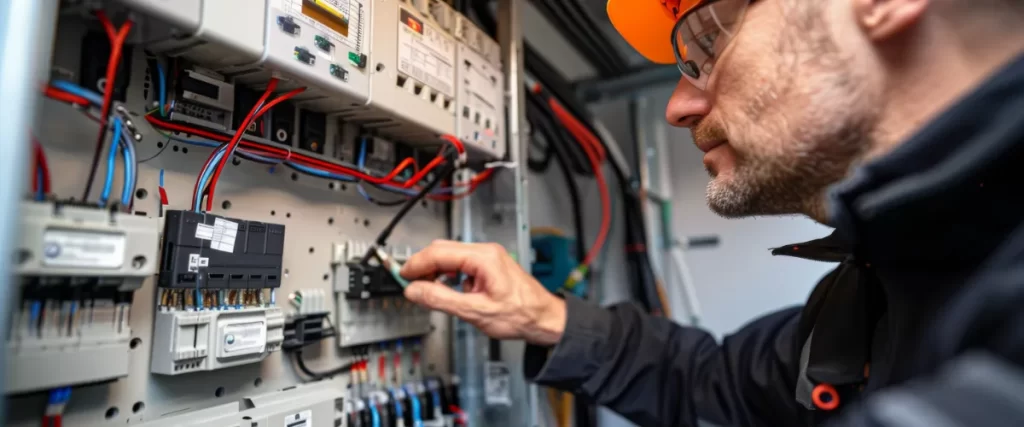
Why Whole House Surge Protection Matters
Most homeowners assume power surges only happen during big lightning storms. That’s partly true, but the reality is that the vast majority of surges come from inside your own home.
Every time your HVAC system kicks on, your refrigerator compressor cycles, or your washer shifts into spin mode, it sends a small voltage spike back through your home’s electrical system.
These internal surges are smaller, but they’re constant. Over time, they slowly degrade your sensitive electronics, like hundreds of tiny paper cuts.
Then there’s the external stuff. Utility switching from the power company, downed lines in your neighborhood, and yes, lightning strikes nearby (even indirect ones) can push dangerous excess voltage through your circuits.
One thing worth knowing: no surge protection device, no matter how good, can handle a direct lightning strike. Disconnect sensitive electronics if a severe storm is headed your way, regardless of what’s installed at your breaker panel.
The 7 Best Whole House Surge Protectors of 2026
| Device | Type | Surge Rating | Enclosure | Warranty | Est. Price |
| Eaton CHSPT2ULTRA | Type 2 | 108kA | NEMA 4 | Lifetime + $75k coverage | ~$160–$185 |
| Square D HEPD80 | Type 1 | 80kA | NEMA 4X | 5 years + $75k coverage | ~$136 |
| Siemens FS140 | Type 2 | 140kA | NEMA 4X | 10 years | ~$70 |
| Leviton Type 1 36kA | Type 1 | 36kA | NEMA 4X | Varies | ~$50 |
| Schneider HEPD50 | Type 1 | 50kA | NEMA 4X | 3 years | ~$65 |
| Furniqro FHSPD108S | Type 2 | 108kA | Commercial-grade | Varies | ~$90 |
| Siemens Boltshield FSPD036 | Type 1 | 36kA | NEMA 4X | Varies | ~$50 |
1. Eaton CHSPT2ULTRA — Top Overall Pick
The Eaton CHSPT2ULTRA is the most consistently recommended whole-house surge protector among professional electricians right now.
It has a 108 kA surge current rating per phase, which is among the highest you’ll find in residential products.
It connects to any manufacturer’s load center, so compatibility is rarely a concern. It also has an LED indicator and is compact enough to fit in most panels without a fight.
The lifetime limited warranty, with up to $75,000 in coverage for connected equipment, adds real value.
1. Eaton CHSPT2ULTRA — Top Overall Pick
The Eaton CHSPT2ULTRA is the most consistently recommended whole-house surge protector among professional electricians right now.
It has a 108 kA surge current rating per phase, which is among the highest you’ll find in residential products.
It connects to any manufacturer’s load center, so compatibility is rarely a concern. It also has an LED indicator and is compact enough to fit in most panels without a fight.
The lifetime limited warranty, with up to $75,000 in coverage for connected equipment, adds real value.
2. Square D HEPD80 (Schneider Electric)
The Square D HEPD80 is one of the most trusted names in residential surge protection, and for good reason.
It delivers 80kA of surge suppression per phase, handles 120/240V single-phase systems, and is certified as a Type 1 SPD under UL 1449 3rd Edition, meaning it can be installed on either side of the main disconnect, including before the main breaker.
That flexibility makes it easier for your electrician to find the right placement.
It comes with a five-year warranty and $75,000 in connected equipment coverage, features a green LED status indicator, and is equipped with a NEMA 4X enclosure for indoor or outdoor use.
3. Siemens FS140
This one stands out because of its notification system. Where most devices have a single LED, the Siemens FS140 uses three indicators: an audible alarm, a protection status LED, and a red service LED, so you always know exactly what state it’s in.
The 140kA rating makes it one of the highest-capacity residential units available.
It’s compatible with a 30-amp or smaller 2-pole circuit breaker, fits a NEMA 4X outdoor enclosure, and works on standard 120/240V 60-Hz split-phase systems.
If you want maximum capacity plus clear status feedback, this is a serious contender.
4. Leviton Type 1 Whole House Surge Protector (36kA)
The Leviton Type 1 is a solid choice for homeowners who want a UL 1449-listed device that installs before the main breaker, providing protection at the service entrance itself.
At 36kA per phase, it won’t match the Eaton or Siemens models in raw capacity, but it’s durable, NEMA 4X rated, and meets NEC requirements.
LED indicators show status clearly. It’s a reliable option for older homes or smaller loads where a 36kA rating is genuinely sufficient.
5. Schneider Electric HEPD50
The HEPD50 is the more compact sibling of the HEPD80.
It’s a 50kA Type 1 device rated for both indoor and outdoor installation, and it snaps into most residential load centers without special tools. CSA and UL 1449 3rd Edition certified, three-year warranty, and a 50kA downline guarantee back it up.
A good fit for newer homes with modern panels where you need a clean, no-fuss installation.
6. Furniqro FHSPD108S
The FHSPD108S from Furniqro is a newer entrant to the market that’s worth attention for its high surge capacity in a compact footprint.
It handles up to 108kA per phase, works on standard 120/240V systems, and is rated for both indoor and outdoor installation in a commercial-grade enclosure.
LED status indicators show whether the device is actively protecting your home. It’s compatible with any brand of load center or circuit breaker, which keeps installation straightforward.
It doesn’t have the brand pedigree of Eaton or Schneider Electric, but for homeowners who want high-capacity coverage from a focused surge protection manufacturer, it punches above its price point.
7. Siemens Boltshield FSPD036
Budget-friendly and simple. The Siemens Boltshield FSPD036 provides 36kA of protection, is UL listed and Type 1 certified, and installs externally in parallel with your electrical equipment. Its NEMA 4X enclosure means it works outdoors without issue.
If you’re protecting a smaller home, a detached garage, or a subpanel, this is an affordable and trustworthy option from a brand with a long track record in residential electrical.
What to Look for Before You Buy

Here are the key things that actually matter when comparing devices:
- Surge current rating (kA): This indicates the maximum current the device can handle. Higher is better. Look for 36 kA minimum and 80 kA or higher for serious protection.
- UL 1449 certification: This is the safety standard all reputable devices must meet. Don’t buy anything that isn’t UL-listed.
- Enclosure type: NEMA 4X means it’s rated for both indoor and outdoor use, giving you more flexibility.
- LED indicators: You need to be able to tell at a glance whether the device is still actively protecting your home or has been depleted.
- Warranty and connected equipment coverage: Some manufacturers will pay out if their device fails to protect your appliances. Read the fine print carefully.
- Installation type: Type 1 devices can be installed on either side of the main disconnect, including before the main breaker. Type 2 devices install on the load side only. Most residential installs use Type 2, though several top-rated devices are Type 1.
A licensed electrician needs to install a whole-house surge protector, since it connects directly to your main electrical panel. On natural gas and propane units, worn plugs cause hard starts and misfires.
FAQ: Whole House Surge Protectors
How much does it cost to have a whole-house surge protector installed? The device itself typically runs $40 to $250, depending on the model. Electrician labor for the installation adds to that, with most jobs being straightforward and completed in an hour or two. The total out-of-pocket cost for most homeowners falls between $200 and $500.
How long does a whole-house surge protector last? Most devices have a life expectancy of 5 to 10 years under normal conditions, though this shortens if they absorb multiple major surges. Many units have LED indicators that turn off or change color when the internal MOVs have been depleted, which is a sign that they need replacement.
Can I install it myself? Technically, the devices themselves aren’t complicated, but the installation involves working directly inside your main electrical panel, where you’re exposed to live wires even with your main breaker off. A licensed electrician is strongly recommended, and many local codes require it.
Do I still need surge protectors on individual devices? Yes. Whole-house protection handles the big surges at the service entrance, but layered protection with both panel-mounted and point-of-use protectors for computers, TVs, and home theater systems provides the best coverage for sensitive electronics.
Will a whole-house surge protector protect against lightning? It protects against voltage surges that travel through your wiring due to nearby lightning. It cannot protect your home’s electrical system from a direct lightning strike. During severe storms, unplugging critical electronics remains the safest option.
What’s the difference between Type 1 and Type 2 surge protectors? Type 1 devices can be installed on either side of the main disconnect, including before the main breaker, which puts them closer to where surges enter from outside. Type 2 devices install on the load side only, after the main breaker. Both satisfy the 2020 NEC requirement, and both offer strong protection. Your electrician will determine the best placement for your panel.
Does the 2020 NEC now require whole-house surge protection? The 2020 National Electrical Code, Article 230.67, now requires a Type 1 or Type 2 surge protective device for all new and replaced dwelling unit services. Many states have already adopted this code, and the requirement is expanding. If you’re replacing your service panel or doing major electrical work, your electrician may be required to install one regardless.
Ready to Get Protected? Skip the Research and Just Call.
Regular generator maintenance is, in the most practical sense, insurance for your insurance.
Picking the right device is just step one. Getting it installed correctly, making sure it fits your panel, confirming the wiring meets code, and knowing it’s actually working afterward, that’s a different conversation entirely.
If you’d rather hand that off to someone who’s been doing this for decades, the team at Crosswyre Electric is ready.
call us at (610) 214-2179 or message us here to schedule an installation. Licensed, insured, same-day availability, and no surprises on pricing.