
Most electrical failures don’t announce themselves. They build quietly over months, sometimes years, before something finally gives.
A proper electrical preventive maintenance checklist helps you find those problems early, not when they’ve turned into an emergency.
Why This Checklist Exists
According to the National Fire Protection Association’s home structure fire data, electrical distribution and lighting equipment caused an average of 31,650 home fires per year over the five-year period from 2019 to 2023, producing $1.6 billion in direct property damage annually.
Planned maintenance is what separates the homes that avoid those numbers from the ones that contribute to them.
1. Start With a Visual Inspection of the Electrical Panel
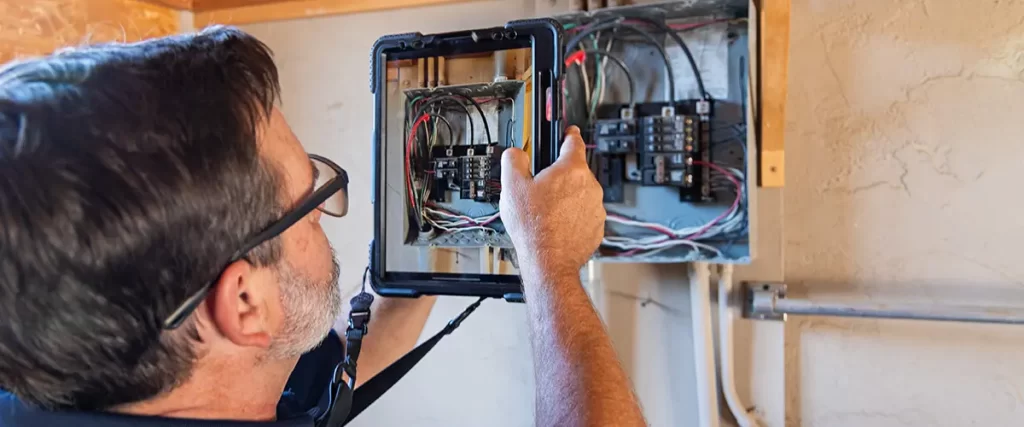
Once a month, open the panel door and look it over with the naked eye.
If it smells like burning plastic when you open it, call an emergency electrician immediately.
If not, here are some things to look for:
- Scorch marks or discoloration near breakers
- Corrosion on bus connections and mounting hardware
- Carbon deposits around terminals
- Any sign of physical damage to the panel box itself
Hot spots develop gradually, and this monthly check is how you find them before they cause equipment failures.
2. Test Your Circuit Breakers Every Quarter
Circuit breakers are protective devices. But they can degrade from age, excessive moisture, or repeated overloads without giving you any outward sign.
Every three months, manually trip each breaker and confirm it resets cleanly.
A breaker that feels warm to the touch, won’t hold position, or won’t reset at all is no longer doing its job. That’s worth taking seriously.
3. Check Electrical Connections for Corrosion and Loose Hardware

Loose electrical connections are behind many electrical system failures.
Normal operating conditions cause thermal expansion and contraction over time, which gradually loosen connections. Throw excessive moisture into the equation, and corrosion moves in quickly.
Look for discoloration around connection points, improperly secured wiring, or oil leaks near motor control centers or transformers. Tighten what needs tightening, and carefully vacuum out any accumulated grime.
4. Inspect Grounding Systems Once a Year
A grounding system provides a safe path for fault current to earth. It’s what keeps a short circuit from becoming something far worse.
When that system is compromised, the protection disappears, even if everything else looks fine.
An annual inspection should confirm that all ground connections are intact, labeled, and free of corrosion.
If you’ve added circuits, modified electrical work, or brought in new equipment since the last check, verify those additions are properly grounded.
5. Test GFCI Outlets and Surge Protection Devices
GFCI testing takes about thirty seconds: hit the test button, confirm the outlet trips, press reset, confirm power returns.
Do that monthly. It’s a small habit that ensures these protective devices are working when you need them.
Surge protection devices are trickier because they fail silently. They absorb surges over their lifespan and eventually stop protecting anything while looking completely normal from the outside.
Check the status indicator light periodically and follow the manufacturer’s recommendations on replacement. Most devices are rated for 3-5 years under normal conditions, or sooner after a significant surge event.
6. Review Lighting Systems and Your Automatic Transfer Switch
Lighting that’s failing or improperly installed can trap heat in ways that create hazards over time.
During this inspection, look for fixtures running hotter than they should, loose or poorly secured mounting hardware, and any older lighting installed in locations that now require weatherproof fixtures per current code.
If your home has a generator, test the automatic transfer switch during this same visit. A transfer switch that fails during a power outage is the kind of discovery nobody wants to make mid-outage.
Our electrical safety checks guide walks through what licensed electricians look for during a home walkthrough, including issues that commonly arise in older homes.
7. Keep Detailed Documentation After Every Inspection
Documentation turns isolated observations into patterns. A circuit breaker flagged once is a data point. One flagged three inspections in a row is a problem that’s telling you something.
Log inspection dates, findings, who performed the work, and what corrective actions were taken. An organized EPM program lives or dies by its paper trail, and it’s also what regulatory compliance and safety audits will ask for if your property is ever reviewed.
If you’ve been seeing unexpectedly high repair costs and aren’t sure why, our blog on what electrical repairs typically cost breaks down pricing so you know what’s reasonable before anyone quotes you.
Frequently Asked Questions
How often should I schedule a complete electrical preventive maintenance inspection?
GFCI testing and panel visual checks belong on a monthly rotation. Circuit breakers get quarterly attention. Grounding systems and a full connection review typically happen once or twice a year. Your maintenance schedule should also factor in your equipment’s age and how hard it’s been running.
What’s the difference between an EPM program and a one-time safety audit?
A safety audit gives you a snapshot of where things stand on a single day. An electrical preventive maintenance program is ongoing. It tracks conditions over time, catches developing problems before they cause equipment failures, and builds the documentation record you’d need to demonstrate compliance if required.
Can homeowners handle any of this on their own?
Visual inspections and GFCI testing are reasonable for most homeowners. Anything that involves opening panels, working with circuit breakers, or testing insulation resistance should be left to a licensed electrician. Improperly done electrical work introduces hazards that weren’t there before.
Leave the Checklist to Someone Who Carries It for a Living
Done right, this electrical preventive maintenance checklist keeps your electrical system in good shape and catches problems early.
At Crosswyre Electric, we handle everything on this list, along with emergency electrical repairs when something’s already gone sideways. If you’d rather know your system is in good hands, give us a call.
Call us at (610) 214-2179 or message us here.